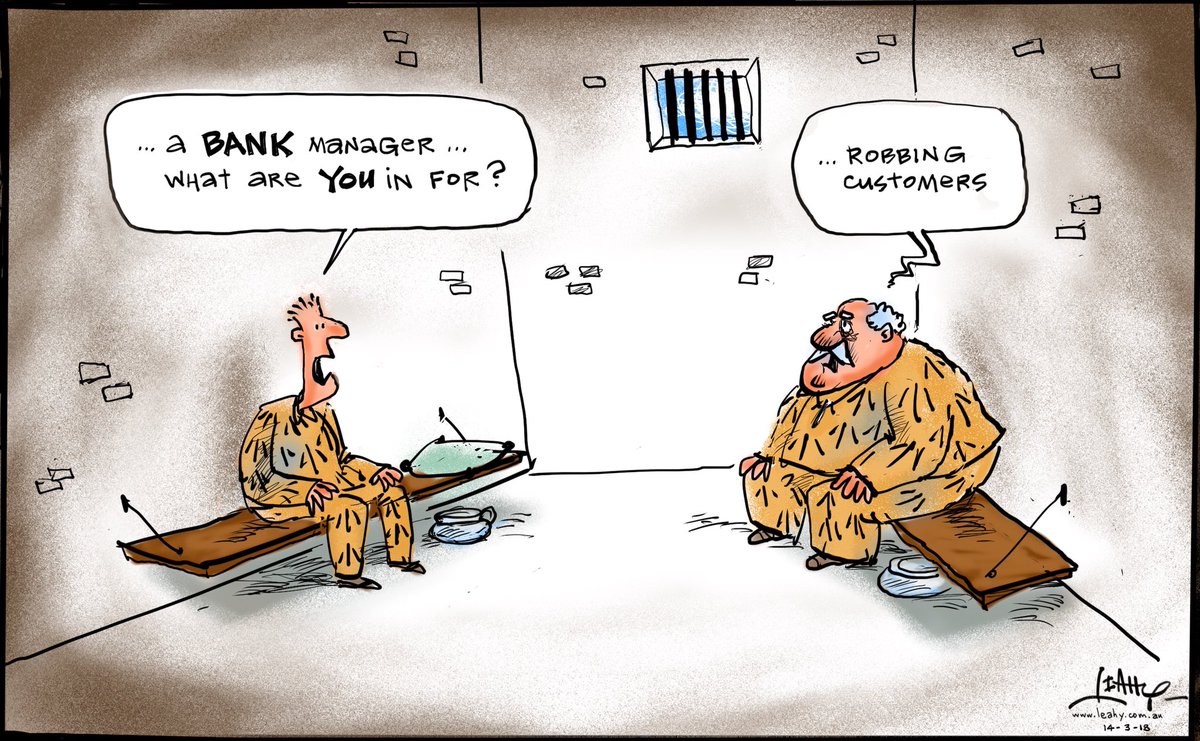
Too bad Monopoly doesn’t have its own version of a Royal Commission to investigate the actions of those pesky bankers …
So, after many many nights of deliberation – I decided on a topic for my paper … you guessed it … the infamous and prominent Banking Royal Commission (or in its full title – The Royal Commission into Misconduct in the Banking, Superannuation and Financial Services Industry). Yes, that pesky little Commission that dominated Australian headlines for over a year. To be fair, I think I was a little naïve when I took a stand and thought it was a good idea to write my paper on it. After a few more days of research, I realised just how huge it was and that I really needed to narrow down my field of study.
My interest in the Royal Commission stemmed from following the news cycle through the rigmarole that was the Commission, starting all the way back in 2017. Luckily enough, last Summer I did an internship at one of the Law Firms representing one of the Big Four banks, and this only increased my interest into probably the biggest Royal Commission the country had ever seen. While during this time, I was able to see it from a purely legal lens and the legal repercussions of such a Commission, I thought it would be interesting to investigate it for my paper, from a purely financial and economic perspective. And that’s how I arrived here.
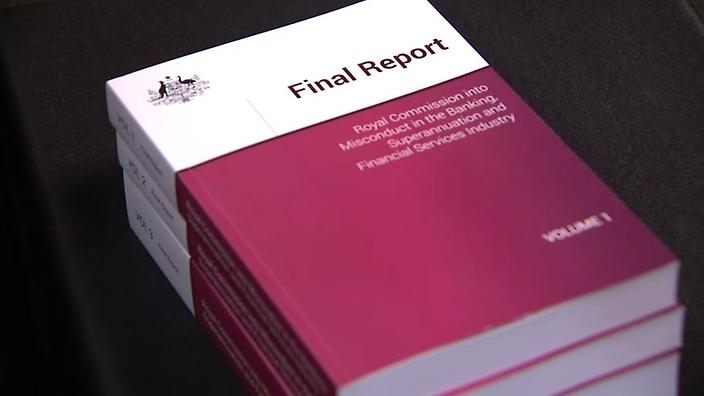
For those of you following along at home, the Banking Royal Commission was instituted by Prime Minister (at the time) Malcom Turnbull in 2017 after a series of scandals that tainted the Banking industry in Australia. Turnbull appointed Justice Hayne as the Commissioner and it ran from 14thDecember 2017 to the 4thFebruary 2019 (when the Final Report was commissioned). The Final Report was incredibly damning, and Commissioner Hayne announced that a major overhaul of the Banking, Financial and Superannuation Sectors was imperative for Australia. Hayne made 76 recommendations encompassing all aspects of these sectors, including a compensation scheme for those affected by the misconduct of these entities.
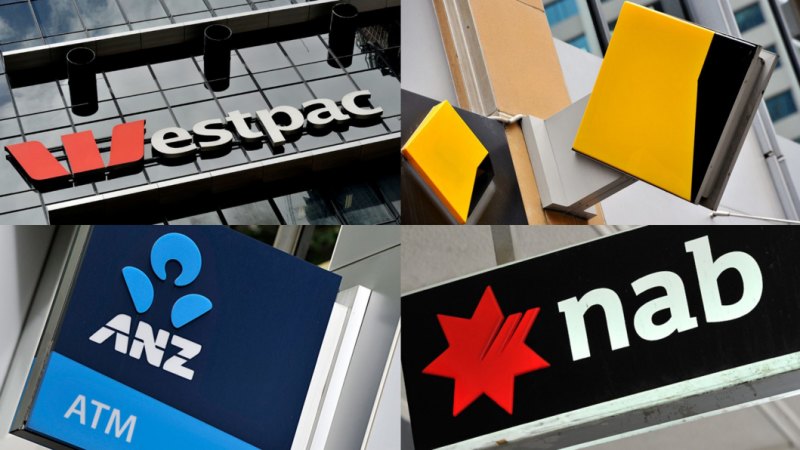
In an attempt to narrow down my focus, I had decided to investigate the impact of the findings of the Banking Royal Commission on the performance of the Big 4 Banks. I realised even this was extraordinarily broad. More specifically, I needed to look into what I meant by the term ‘performance’ … and so the question arose as to how I was going to rank the banks’ performance. So, I have decided to look into share prices. This is for two main reasons: 1) Share prices of public companies are easily accessible and updated daily and 2) This provides a good indication of the company’s earnings and share prices are a good barometer of a company’s health. Further, it will be relatively simple to compare share prices pre and post Commission. So, at this point in time, my main focus for my report is: ‘Did the findings/recommendations of the Banking Royal Commission have an immediate, negative effect on the Share Prices of the Big Four Banks?’.
I have decided that the preliminary questions I need to research are: What are the socio/legal/economic sources of what effects the price of shares? What happened to the price of banks’ shares after previous inquiries? What is the effect of increased regulation on share prices? And what regarding the Royal Commission is affecting the banks’ performance – is it bad publicity? Compensation costs? Loss of investor/consumer confidence? Whilst I feel confident in the content and literature review side of things, because I have stayed up to date with the Commission from the start and am excited to build on this knowledge with literature I am most anxious about my methodology. At this point, I believe my favoured methodology will be a time-series regression, but I am unsure of this too. I am only completing ECON339 this semester and hence, have just been exposed to EViews. I will most definitely have to develop this skill set in order to be able to produce and review data that I am able to draw conclusions from. The other part of my research area that I am somewhat stressed about is a lack of academic articles surrounding the Royal Commission. This is because while so much has been written about it, most of it is in the form of news articles and due to the recent nature of the Commission, there are only a handful of pieces of academic literature. I have spoken to the library staff about the best ways to find such information in order to alleviate this pressure.
– Alexia #FW